



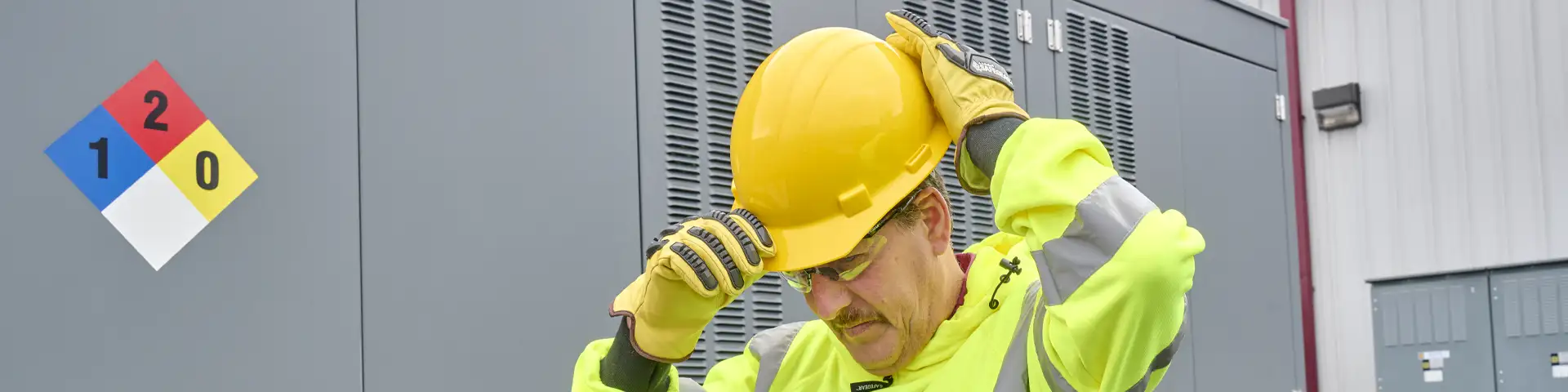
Your Headache-Free Guide to Head Protection
Did you know that hard hats have been around for over a century? It’s true. Construction workers were among the first to wear these protective helmets. While common sense often tells us when head protection is necessary, OSHA regulations offer additional guidance.
Ever wonder why hard hats are a must on the job? Well, under OSHA’s General Industry standard (29 CFR 1910.135) and Construction standard (29 CFR 1926.100), employers must ensure workers wear protective helmets in areas where there’s a risk of head injury from falling or flying objects, electrical hazards, or accidental bumps into fixed structures.
Additionally, these helmets must meet ANSI Z89.1 requirements for impact and penetration resistance and provide electrical protection when necessary. These standards are critical safeguards that help prevent serious injuries and keep workers safe on the job.
According to OSHA’s latest enforcement and injury data, head protection standards (29 CFR 1910.135 and 1926.100) continue to rank among the most cited regulations.
According to OSHA Enforcement Data, in 2025, the Agency issued 60 citations to employers for violations to 1910.135, totaling $248,000 in penalties. Likewise, 1926.100 has been cited 833 times, with the penalties totaling over 2.6 million dollars.
How Hard Hats Protect Your Employees
Head injuries are caused by falling or flying objects, or by bumping your head against fixed objects; they can also result from electrical shock and burns. Hard hats are designed to resist penetration and absorb the shock of a blow, using a hard outer shell and an internal suspension to lessen injury.
Workers should wear hard hats whenever there’s a possible danger of head injury from impact, falling or flying objects, or electrical shock and burns. If there aren’t any falling‑object hazards, a bump cap may be allowed to protect against minor bumps only.
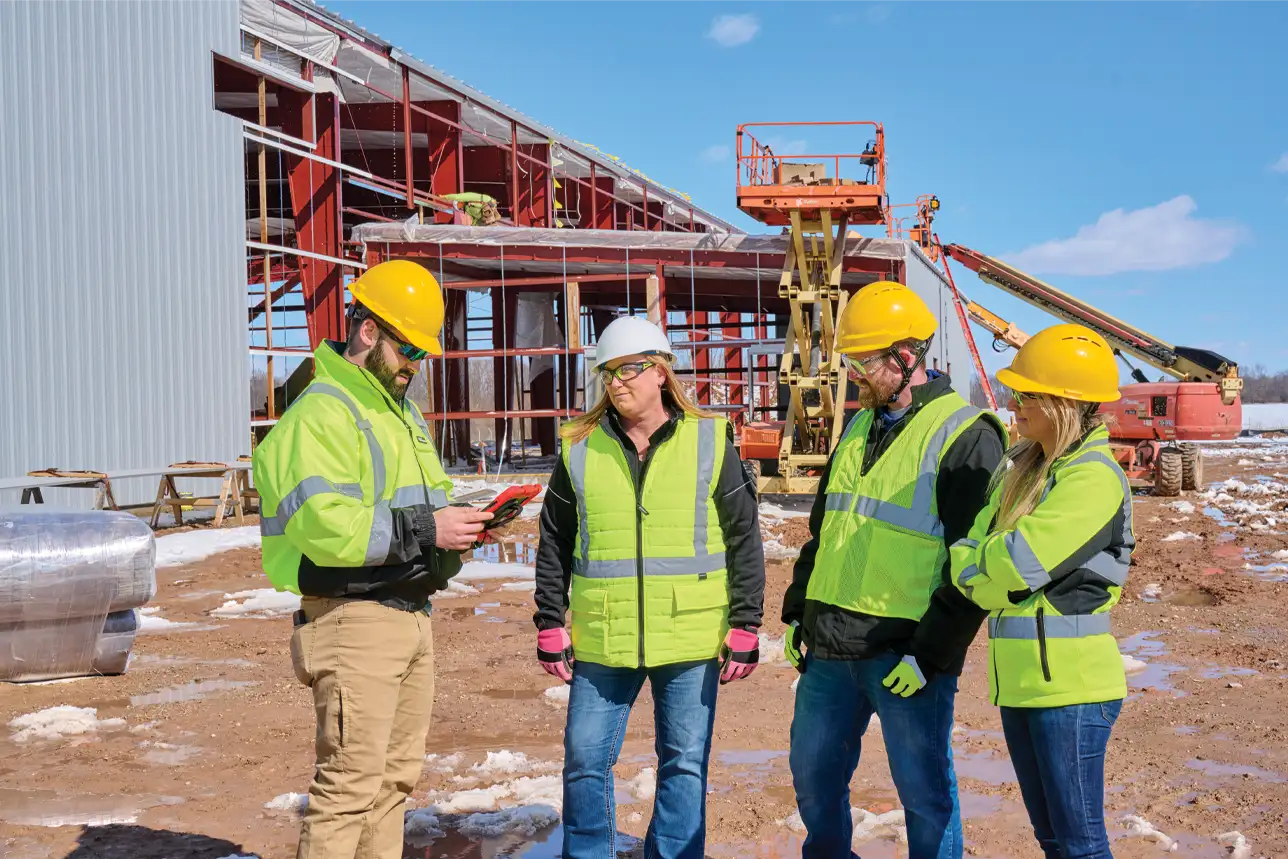
Types and Classes of Protective Headgear
Keep in mind, just providing head protection to workers isn’t enough. Employers must choose the correct type and class based on recognized hazards in the workplace.
Hard hats are marked “Type I” or “Type II” on the manufacturer’s label per ANSI/ISEA Z89.1; this indicates the helmet’s impact protection type. When buying new head protection, choose the model that matches your actual hazards.
Types
Hard hats will have a Type I or Type II rating on the manufacturer’s label. These ratings are based on ANSI Z89.1’s impact standards.
- Designed to reduce the force of impact from blows to the top of the head.
- Used in environments where lateral impact hazards (side, front, or back) are not present.
- Protection is limited to the crown (top) of the head—it does not provide significant protection against side impacts.
Type II
Shop Type II Head Protection- Designed to reduce the force of impact from blows to the top and sides of the head (front, back, and lateral).
- Used in construction sites and complex industrial environments where workers face multiple head-contact exposures.
- Provides off-center impact protection in addition to crown protection—ideal for environments with a higher risk of side impacts.
Classes
Hard hats are also broken up into different classes based on electrical hazard.
Classes
Shop All Head Protection- Class G (General): Low voltage exposure up to 2,200 volts
- Class E (Electrical): High voltage exposure up to 20,000 volts
- Class C (Conductive): No voltage protection
Hard hats with a front bill or full brim help shield your face from sun, rain, and light debris, but the protection level comes from the helmet’s ANSI Type (Type I = top impact; Type II = top and side impact) and electrical Class (G/E/C).
Additionally, modern safety helmets usually include chin straps and often provide Type II side‑impact protection, which is why many employers and OSHA’s own staff are moving toward them.
Colors, like white and yellow, can be used to identify workers, but OSHA and ANSI don’t have hard hat color requirements in general workplace applications.
Vented vs. Unvented
Employees are likely to use comfortable PPE. Employers should consider comfort, fit and style while selecting PPE.

Vented
Using a vented hard hat or safety helmet promotes airflow that keeps workers comfortable. Vented designs reduce heat and humidity buildup, making them ideal for situations where ventilation is important. However, vents can be potential access points for electrical hazards, so vented options should be avoided when the highest level of electrical protection is required.
Shop Vented Head Protection
Unvented
An unvented hard hat or safety helmet can trap heat and humidity, which may cause discomfort for the user. Despite this, unvented options are recommended when electrical hazards are present because they provide better protection against electrical risks.
Shop Unvented Head Protection
Hard Hat & Safety Helmet Use
Wearing a helmet incorrectly can lead to serious injuries. Wearing a hard hat with the brim backwards is only acceptable if the manufacturer certifies it for reverse donning; otherwise, it can compromise both impact protection and electrical insulation. The suspension system is critical and if there are signs of wear or damage, it should be replaced immediately. Likewise, if the shell is cracked, faded, or brittle, it’s time for a new helmet. As a best practice, hard hats and safety helmets should be replaced at least once every year or sooner if damaged.
Maintaining Protective Gear
Headgear should be inspected every day. Workers must care for their equipment to ensure it functions correctly according to manufacturer recommendations. Avoid exposing your protective helmet to excessive temperature extremes, impacts, chemical exposures, abrasive cleaners, rough treatment or other types of harsh wear and tear. These hazards can reduce the helmet’s service life and protective properties. Damage or poor maintenance may result in reduced user protection. Here are some suggestions for maintaining your headgear:
- Check your head protection for cracks (even hairline cracks), dents, and wear every time it is worn. Discard head protection that is cracked or looks chalky or dull.
- Wash your head protection (especially the sweatbands and cradles) monthly in warm, soapy water and rinse thoroughly. Replace worn sweatbands, if needed.
- Avoid painting your helmet. Paint contains solvents that may reduce the dielectric properties, if applicable, or affect the actual shell.
- Check the condition of the suspension system. Look for torn cradle straps, broken sewing lines, loose rivets, defective lugs, and other defects.
- Avoid direct sunlight for long periods of time
- Store in a cool, dry location
- Keep away from heavy or sharp objects
With these tips, choosing and maintaining the proper safety headgear for your workers can be simple and stress-free.
Head Protection Practices and Challenges
Despite more options than ever, selecting head protection can be confusing and complicated, especially when trying to understand the key differentiators among them. Download the J. J. Keller and ISEA collaborative study, Head Protection Practices and Challenges, for an in-depth look at the current state of head protection and the challenges safety professionals face.