


J. J. Keller and COSTHA Release New Benchmark Study on Hazmat Transportation Safety
Report highlights persistent operational risks, training challenges, and the growing role of technology
For immediate release - July 1, 2026
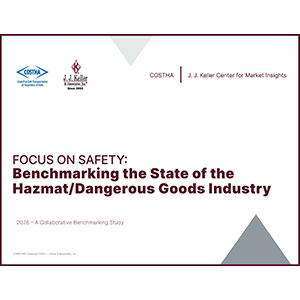
The J. J. Keller Center for Market Insights and COSTHA (Council on Safe Transportation of Hazardous Articles) today announced the release of a new collaborative benchmarking study, Focus on Safety: Benchmarking the State of the Hazmat/Dangerous Goods Industry, offering an objective, real-world view of current hazmat transportation practices.
Based on input from 250+ industry professionals across the hazardous materials supply chain, the study establishes a baseline for understanding current conditions, shared risks and emerging priorities across modes and roles.
Access the full study on J. J. Keller's or COSTHA's website:
- J. J. Keller: Focus on Safety: HAZMAT/DG Industry Benchmarking Study | J. J. Keller
- COSTHA: Hazmat Study 2026
"Many of the most significant risks our consultants see today are rooted in everyday realities, including human error, training complexity, and process gaps," said Steve Murray, Executive Vice President of Professional Services at J. J. Keller. "By establishing a clear baseline with this research, we hope to create conversations that lead to meaningful progress in safety across the industry."
Key Study Findings:
- Preventable errors persist. Routine tasks such as documentation, labeling, and classification remain leading sources of compliance issues, often driven by time pressure and process gaps.
- Training is essential but complex to manage. Organizations value training but struggle to keep content current, track renewals, and align training to specific roles.
- Undeclared hazmat remains a key risk. Particularly in inbound shipments, undeclared hazardous materials continue to challenge organizations across the supply chain.
- Air transport and lithium batteries create additional complexity. Regulatory variation and evolving requirements increase difficulty in these high-risk areas.
- Technology adoption is rising, but with caution. Companies are seeking tools that support decision-making and reduce errors without replacing human judgment.
“The safe transportation of hazardous materials is fundamental to protecting people, property, and the environment,” said Tom Ferguson, Administrator & Chief Regulatory Compliance Officer, COSTHA. “As supply chains grow more complex, this study can help industry players better understand the real-world challenges that impact safety every day.”
The study was conducted via an online survey from November 24 to December 8, 2025, gathering insights from shippers, carriers, manufacturers, and other professionals involved in hazardous materials transportation.
About the J. J. Keller Center for Market Insights
The J. J. Keller Center for Market Insights is the collaborative research arm of J. J. Keller & Associates, Inc., focused on sharing trends and insights derived from decades of safety and compliance data. Through proprietary studies and partnerships with research organizations, the center publishes reports designed to advance safer workplaces, job sites and highways.
About COSTHA
COSTHA, founded in 1972, is a not-for-profit industry association representing more than 165 companies involved in the global dangerous goods supply chain, including shippers, carriers, manufacturers, and service providers. The organization advocates for the safe, secure and efficient transport of dangerous goods across all modes and serves as a trusted industry voice through engagement with regulators and participation in international forums. COSTHA also provides regulatory updates, technical guidance, training and collaborative working groups to support its members.
Media Contacts
J. J. Keller & Associates, Inc.
COSTHA